


Nebraska ranchers share land decisions through UNL research project
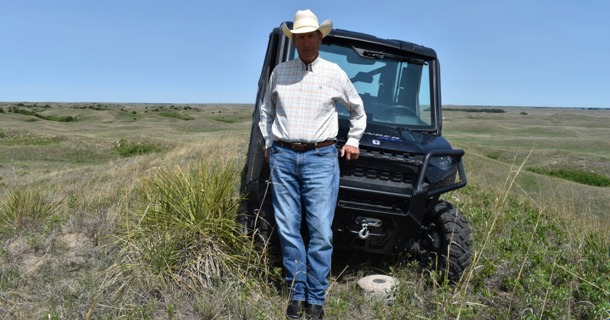
Lincoln, Nebraska, April 22, 2026 — On Nebraska ranches where families have managed the same land for generations, decisions about grazing, infrastructure and stewardship are rarely made for a single season. Instead, they are shaped by decades of observation, evolving research and a deep sense of responsibility to the land.
Researchers at the University of Nebraska–Lincoln are documenting those decisions as part of a $5 million research project focused on sustainable beef production and grazing systems.
The effort is part of Advancing Development of Assessments, Practices and Tools to Produce Beef in Grazing Systems, a five-year project led by Galen Erickson within the university’s Institute of Agriculture and Natural Resources.
The interdisciplinary project brings together animal scientists, range scientists, remote sensing researchers and social scientists to develop tools that measure carbon sequestration in grazing systems while ensuring rancher perspectives remain central to the research.
As part of the project’s social science component, anthropologist Effie Athanassopoulos and rural sociologist Gwendŵr Meredith are speaking with ranch families across Nebraska to explore how management decisions evolve over generations.
“We’re talking with ranchers who have been on the land for generations and who are leaders in the industry,” Athanassopoulos said. “What has been especially striking is how environmentally conscious ranchers are and how deeply they care about the land.”
She said many ranchers describe themselves not simply as business owners, but as caretakers of the landscape.
“They see themselves as caretakers,” she said. “Their goal is to maintain the grasslands and pass them on to the next generation.”
Listening to multigenerational ranch families
The first round of interviews has focused on ranches near the Barta Brothers Ranch in the Sandhills, where many participating families have managed the same land for three or four generations.
Many of the ranchers interviewed are recognized leaders within the beef industry. Their insights offer a window into how knowledge is passed between generations and how producers adapt research findings within their own operations.
“We’re really trying to understand how ranchers make decisions,” Meredith said. “They’re constantly adapting based on weather, markets, family dynamics and what they observe on their land. It’s hard to be rigid because conditions change year to year.”
Connecting research and ranch management
For many ranchers involved in the study, collaboration with university researchers is a natural part of managing rangeland.
Producers often attend field days, participate in demonstrations and observe research being conducted at sites like Barta Brothers Ranch. Over time, those interactions influence how ranchers adjust grazing systems, water distribution and pasture management on their own operations.
“They interact with the university and integrate research into their own lands,” Athanassopoulos said, describing it as “a conversation between science and practice.”
Those conversations help researchers understand how innovations move from research plots to working ranches.
Early interviews suggest that new practices often spread through relationships among producers and nearby research sites. Athanassopoulos and Meredith said ranchers described how ideas such as rotational grazing gained traction as producers observed research demonstrations and shared experiences within their communities.
Stewardship across generations
Across interviews, researchers have heard a consistent theme: Ranchers make decisions not only for current production, but for the long-term health of the land and livestock.
Infrastructure investments such as wells, pipelines and fencing are often evaluated based on how they improve grazing distribution and protect fragile landscapes.
At the center of those decisions is the recognition that ranchers are temporary caretakers of a long-lived ecosystem.
“They often describe themselves as stewards rather than owners,” Meredith said. “Their goal is to leave the land in good condition for the next generation.”
Expanding the research westward
After focusing initial interviews in the Sandhills, researchers plan to expand the project into western Nebraska to capture a broader range of landscapes and ranching systems.
Nebraska’s rangelands vary widely in climate, soils and vegetation, and those differences shape how producers approach grazing management.
Researchers will continue conducting interviews over the next several years while working to share the results through academic publications and public-facing projects, including a traveling museum exhibition highlighting Nebraska ranch families and the history of ranching in the state.
By documenting how ranchers adapt practices across these diverse environments, the research team hopes to better understand how science and producer knowledge can work together to support resilient grazing systems.
Ultimately, the project aims to ensure that rancher perspectives remain central to research shaping the future of beef production and rangeland stewardship.